Why Electricity Prices That Are Too Low Could Hurt Taiwan — CommonWealth Magazine
I have a piece in CommonWealth Magazine (天下雜誌) — published under the Insight / Op-eds section — on a variable that receives far too little attention in Taiwan’s energy debate: not nuclear or renewables, but electricity prices themselves.
What is CommonWealth Magazine?
CommonWealth Magazine (天下雜誌, Tiānxià) is Taiwan’s flagship economics magazine. Founded in 1981 by journalist Diane Ying (殷允芃) in the wake of the diplomatic break between Washington and Taipei, it has established itself as the most influential publication in Taiwan’s media landscape on macroeconomics, industry, technology, geopolitics, and society. In 2007, it became the island’s first economic media outlet to launch an English-language edition (english.cw.com.tw), aimed at bringing international readers closer to Taiwan and the Chinese-speaking world. Publishing an op-ed there means speaking directly to Taiwan’s economic and political decision-makers.
The argument: a frozen price, but an unfunded freeze
Taiwan has the third-lowest industrial electricity tariffs and fifth-lowest residential tariffs in the world. That affordability is not a market outcome — it is a political choice, made without the financing architecture that should accompany it.
The numbers tell the story. Industrial customers pay an average of NT$4.27 per kilowatt-hour, households around NT$2.77, while Taipower’s (台灣電力公司) average cost of production has hovered around NT$3.8/kWh since early 2025. Every kilowatt-hour sold to a household costs the utility nearly one New Taiwan dollar. In March 2026, the Electricity Tariff Review Committee nonetheless chose to freeze the average tariff at NT$3.78/kWh, citing Middle East volatility and the need to protect industrial competitiveness.
A debt, not a subsidy
The consequences of this freeze are substantial: Taipower’s cumulative losses stood at NT$417.9 billion (roughly US$13 billion) as of late July 2025, despite several rate increases since 2022 and an after-tax profit of NT$72.9 billion in 2024. A NT$100 billion recapitalization plan was also blocked in the Legislative Yuan.
That is the core of my argument: the gap between the tariff charged and the actual cost is not a subsidy — it is a debt. The longer the mismatch between price and funding persists, the more expensive it will be to unwind.
The perverse effect on the energy transition and AI
Cheap electricity also undermines the energy transition. Offshore wind, solar, and geothermal must compete against a regulated tariff that does not reflect the true marginal cost of fossil-fuel generation. Under those conditions, it is difficult to negotiate green power purchase agreements (CPPAs) at scale — the very contracts on which the Lai Ching-te administration’s 2030 climate targets depend.
And demand pressure will only grow: driven by artificial intelligence, electricity consumption could increase by 12 to 13 percent by 2030, while the grid requires tens of billions of NT$ in investment. A frozen tariff designed to protect industry could, paradoxically, end up undermining the very thing it claims to defend.
→ Read the op-ed on CommonWealth Magazine
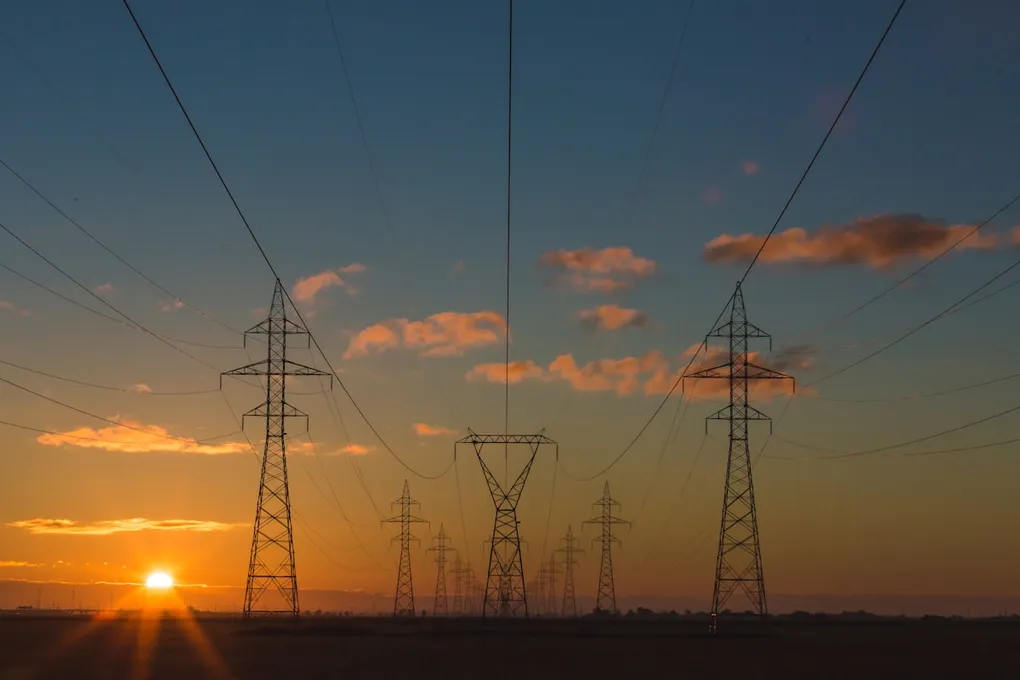
Photo: electrical infrastructure. Photo credit for the original article: Chien-Ying Chiu / CommonWealth Magazine.